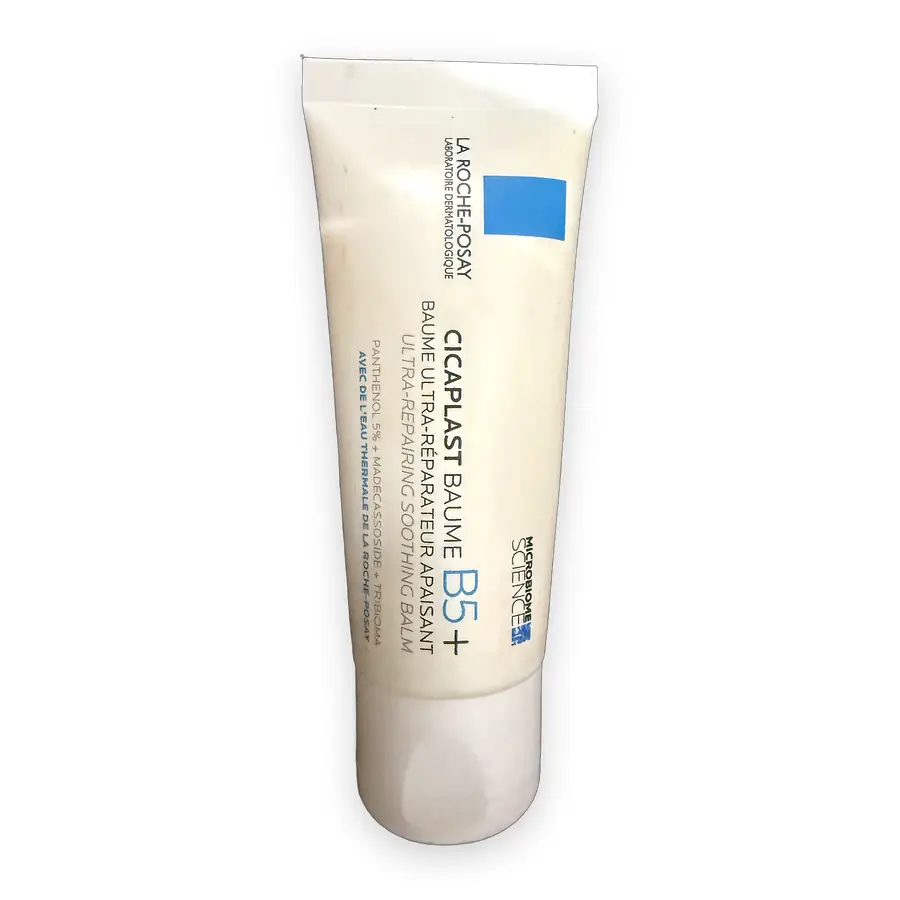
Cicaplast Baume B5+ (40 ml)
- Coconut or palm (source not stated)
- Glycerin, Capryloyl Glycine, Caprylyl Glycol
- Where it was found
- Panama · Arrocha
- Category
- Face
- Last checked
- Full ingredient list (as printed)
- Aqua, Hydrogenated Polyisobutene, Dimethicone, Glycerin, Butyrospermum Parkii Butter, Panthenol, Zea Mays Starch, Propanediol, Butylene Glycol, Cetyl PEG/PPG-10/1 Dimethicone, Trihydroxystearin, Centella Asiatica Leaf Extract, Polymnia Sonchifolia Root Juice, Zinc Gluconate, Madecassoside, Manganese Gluconate, Alpha-Glucan Oligosaccharide, Silica, Aluminum Hydroxide, Magnesium Sulfate, Mannose, Capryloyl Glycine, Caprylyl Glycol, Vitreoscilla Ferment, Citric Acid, Trisodium Ethylenediamine Disuccinate, Lactobacillus, Acetylated Glycol Stearate, Maltodextrin, Polyglyceryl-4 Isostearate, Tocopherol, Pentaerythrityl Tetra-di-t-butyl Hydroxyhydrocinnamate, CI 77891
- Read about these ingredients
- Glycerin / glycerol · Caprylyl / capryloyl / decyl (C8–C10 chains) · Caprylyl glycol
No coconut is named on this label. The open question is Capryloyl Glycine and Caprylyl Glycol. Capryloyl Glycine is made from a plant oil the label never names, and oils of this kind come from coconut or palm kernel most of the time. Caprylyl glycol is usually synthetic, though plant-based versions made from palm kernel or coconut exist. Only La Roche-Posay can say which, so this stays unverifiable until they answer.
What we asked La Roche-Posay, and the reply that didn’t answer it →
More face we checked → · How to read a label for coconut
Always read the label on the product in your hand: formulas change. Educational only, not medical advice. Always confirm with your allergist.